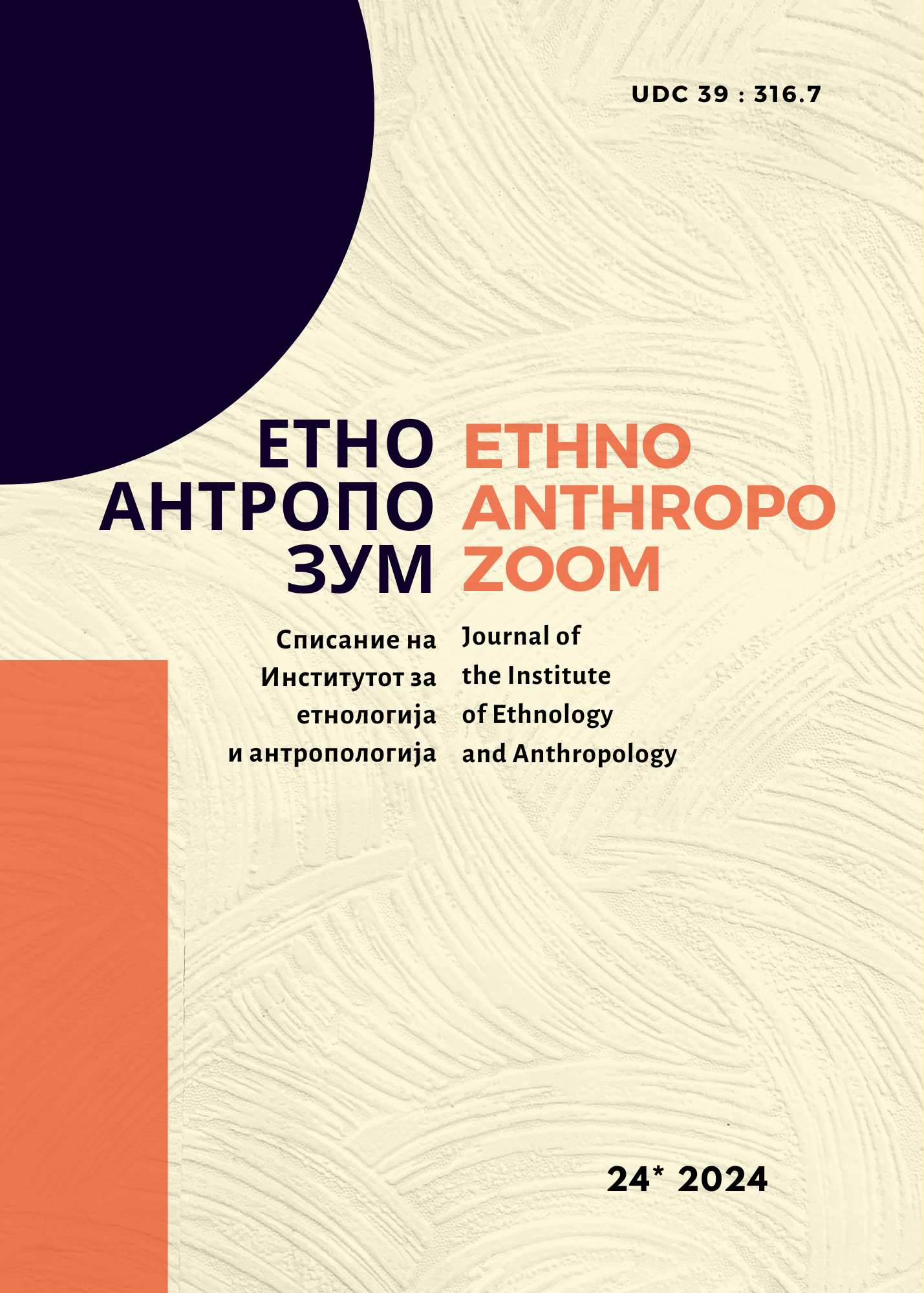
MUTUAL AID AND OTHER FORMS OF JOINT WORK AS MANIFESTATIONS OF SOLIDARITY IN THE MACEDONIAN TRADITIONAL VILLAGE CULTURE
ДОИ:
https://doi.org/10.37620/EAZ242424153gjКлучни зборови:
mutual aid, colidarity, MacedoniaАпстракт
“Mutual help” refers to a traditional folk institution of collective voluntary labor that constituted a central feature of the village as a social and economic community in Macedonia. Grounded in the principle of reciprocal exchange of labor services, this customary practice functioned as a mechanism of social cohesion, economic cooperation, and communal solidarity. Participation was voluntary, yet embedded within a shared moral framework that regulated obligations, expectations, and collective responsibility.
This paper examines traditional forms of customary mutual assistance and traces their transformations over time. The analysis draws on data collected through ethnographic field research, complemented by evidence documented in existing ethnographic literature. By situating mutual help within broader processes of social, economic, and cultural change, the study explores how this institution adapted to shifting rural realities, including modernization, migration, and changing patterns of labor organization. Through this examination, the paper contributes to a deeper understanding of the role of reciprocity and collective labor in the historical and contemporary structuring of rural communities in Macedonia.
Референци
Преземања
Објавено
Издание
Секција
Дозвола
Авторско право(c) 2026 ЕтноАнтропоЗум

Овој труд е лиценциран како Creative Commons Attribution-NonCommercial-ShareAlike 4.0 International License.


 Directory of Open Access Journals
 ROAD - Directory of Open Access Scholarly Resources

 Open policy finder